





Apas Decaf, decaffeinated espresso from Brazil


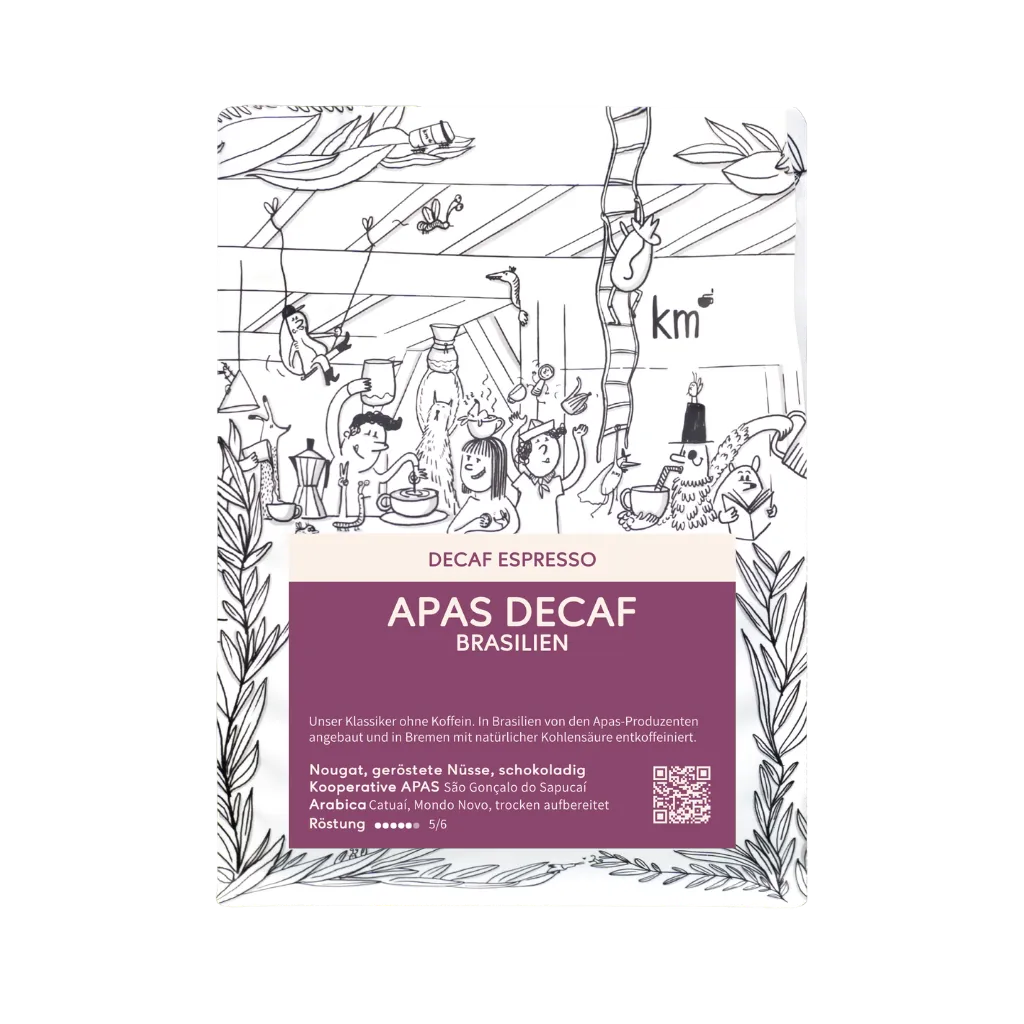
Apas Decaf - Kaffeemacher Info
|
Flavor |
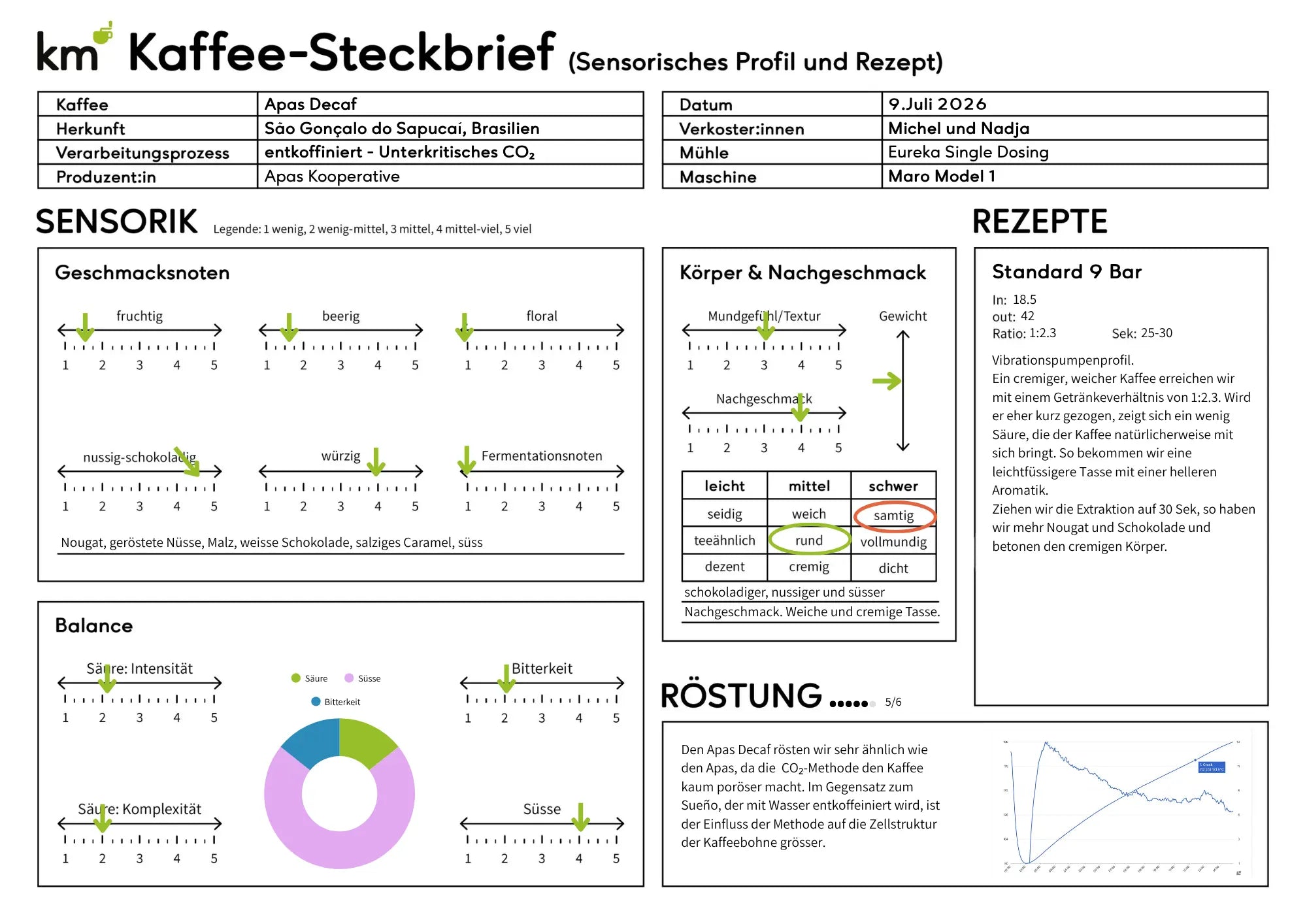
Nougat, roasted nuts, chocolatey |
|
Origin of Beans |
Brazil, São Gonçalo do Sapucaí |
|
Producer |
Apas Cooperative |
|
Varieties |
Local varieties such as Mondo Novo (Arabica) and Catuai (Arabica) |
|
Post-Harvest Process |
Natural |
|
Decaffeination |
Sub-critical CO₂ (natural sparkling carbonic acid) |
|
Decaffeinator |
CR3 in Bremen |
|
All of our coffees are sold as whole beans. |
|
How We Would Prepare Apas Decaf

Why Does Apas Decaf Taste the Way It Does?
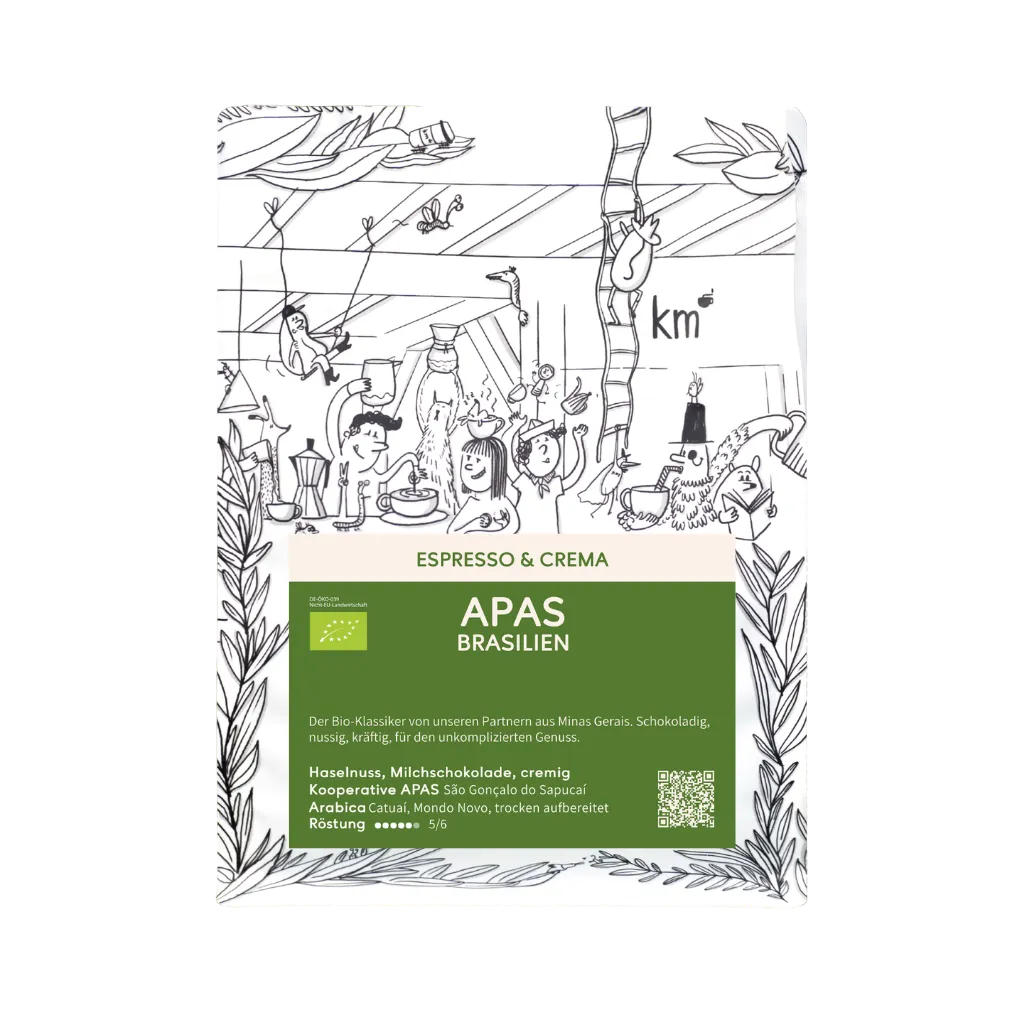
The APAS blend is a mixture of coffees from 71 members of the cooperative who market their coffee under the APAS name. They are among Fairtrade pioneers in Brazil and manage their farms in the region around São Gonçalo do Sapucaí. Time and again, they also achieve success as individual producers in renowned competitions such as the Cup of Excellence. The coffee cherries for the APAS blend are selectively harvested by members on their own farms, dried in the cherry, and then mechanically depulped. This dry processing underscores the nutty and chocolatey character of the coffee.
Tell Me More About Apas Decaf
For years, APAS has been our bestseller because it delights many tastes. We now import several containers per year. The coffee and our collaboration with the cooperative are strategically important to us. In winter 2024, we asked ourselves: What if APAS also existed in decaffeinated form? We contacted decaffeinator CR3 in Bremen and reserved a slot for spring 2025. The APAS blend was shipped to Bremen, decaffeinated there, and we subsequently took the approximately three tons of coffee together with friendly roasteries.
The Decaffeination Process
This coffee was decaffeinated by CR3 in Bremen using sub-critical CO₂, known as sparkling carbonic acid. What all processes have in common is that at the start of treatment, the green coffee is placed in a closed vessel with water or steamed so that the pores of the green coffee open. A solvent is then added to extract the caffeine. In this case, it is the sparkling carbonic acid. In the sub-critical CO₂ method, the CO₂ is converted to a liquid state at high pressure and low temperature conditions, which in combination with water can absorb the caffeine. This process takes several days.
How Do We Roast This Coffee?
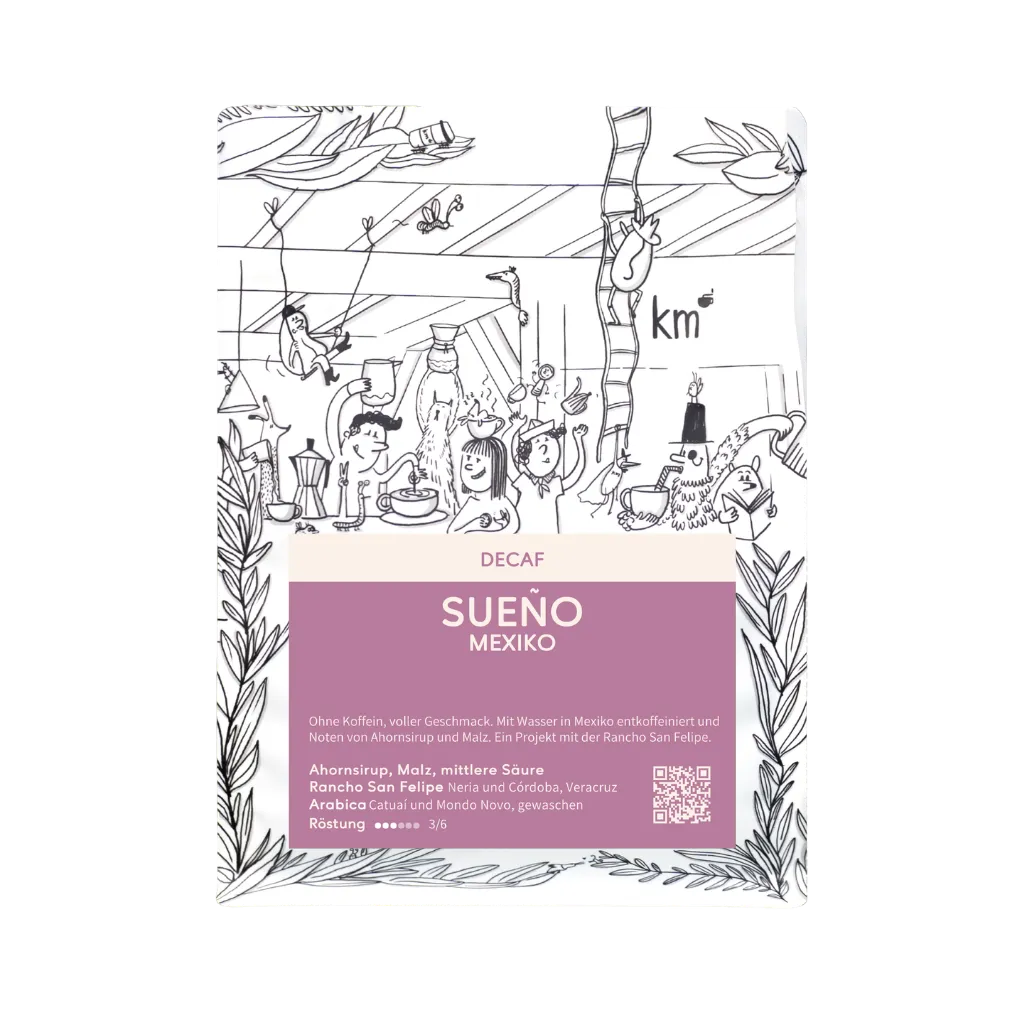
Very similarly to the Apas, since the CO₂ method makes the coffee hardly more porous. In contrast to the Sueño, which is decaffeinated with water, the influence of the method on the cell structure of the coffee bean is greater.
Read Coffee Details in Beanconqueror:

Guaranteed origin
We know exactly where our coffee comes from and when and where it was roasted.

Personal advice
We are here to help you with any questions or problems.

Fast shipping
Delivery from Germany or Switzerland

Free shipping in DE from €75